
Patient Resources
Helpful Information to Support Healing and Prevent Complications
Foot & Ankle Wound Care
Wound care is especially critical for individuals with diabetes. Even a small wound can progress into serious complications if not treated promptly. Many people with diabetes experience neuropathy, which reduces sensation—particularly in the feet.
When feeling is reduced, wounds may go unnoticed. This is why daily foot checks are essential to prevent minor issues from becoming serious problems.
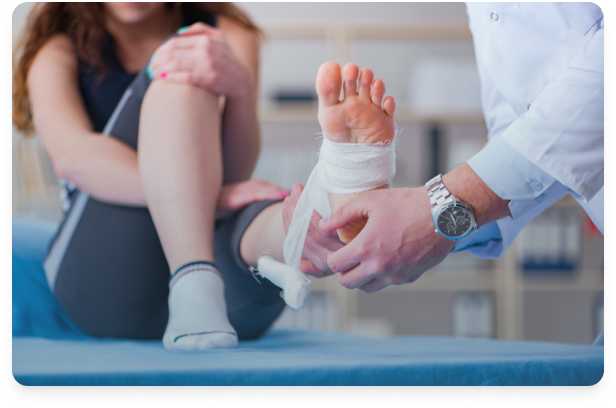
Causes of Diabetic Wounds
Diabetic foot wounds can develop from everyday issues such as tight shoes, small objects in footwear, or regular walking. Minor problems like blisters or calluses can worsen quickly if ignored.
If a wound appears, reduce pressure on the area and seek professional care as soon as possible.
Caring for a New Wound
Follow these steps to ensure proper healing and prevent infection
Rinse the wound gently with clean water. Avoid harsh cleaners.
Avoid soap directly on the wound. Do not use hydrogen peroxide or iodine as they can damage tissue.
Apply antibiotic ointment to keep the wound moist and prevent infection.
Cover with a clean bandage and change it daily to maintain a healthy healing environment.

Wound Prevention for People with Diabetes
- Inspect feet daily, including between toes
- Report foot pain, blisters, redness, or temperature changes
- Wash and dry feet thoroughly every day
- Wear comfortable shoes with adequate room
- Trim toenails straight across to prevent ingrown nails
Diabetic wounds can become serious if left untreated. Watch for these risks:
Slow-healing or non-healing wounds may develop into deep ulcers.
Infection may spread rapidly to surrounding tissue or bone.
Gangrene may occur, potentially requiring surgical removal.